Best Natural Nootropics: An Honest Ingredient Comparison
Best natural nootropic? Ingredient comparison: dose studied, level of evidence, tolerance, claims, and a grid for judging a supplement in Switzerland.
Updated 23 November 2026 · 8 min read
In short: there is no demonstrated “best natural nootropic”. Among common ingredients, only a few nutrients have health claims authorised in Switzerland: vitamin B6, vitamin B12 and folate contribute to the reduction of tiredness and fatigue and to normal psychological function, and creatine (3 g a day) increases physical performance in short, high-intensity exercise. For herbs and mushrooms (bacopa, Lion’s Mane, rhodiola, ginkgo, L-theanine, citicoline), the level of evidence ranges from low to moderate, and no claim is authorised. This comparison is about ingredients, not brands.
How should I read this comparison?
We rated each ingredient on four criteria:
- Dose studied: the dose used in the main human trials. This is the benchmark for judging a product.
- Level of evidence: low (a few small studies, isolated results), moderate (several controlled trials or a meta-analysis, modest effects), to be confirmed (contradictory results or very specific populations).
- Tolerance: what studies report at usual doses.
- Claim status: what a manufacturer is allowed to write in Switzerland.
This ranking summarises published work. It does not predict what you will feel, and these studies do not concern our products.
Comparison of natural nootropic ingredients
| Ingredient | Dose studied (per day) | Level of evidence | Tolerance | Claim status in Switzerland |
|---|---|---|---|---|
| Vitamins B6, B9, B12 | Reference intakes: B6 1.4 mg, folate 200 µg, B12 2.5 µg | Established for the official claims | Good at authorised doses | Authorised: reduction of tiredness and fatigue, normal psychological function; B6 and B12: normal functioning of the nervous system |
| Creatine | 3 g (physical performance); doses vary in memory studies | Claim established for physical exercise; to be confirmed for cognition | Good; water weight gain possible | Authorised for physical performance in short, high-intensity exercise (3 g a day). None for cognition |
| Bacopa monnieri | About 300 mg of extract standardised in bacosides, 12 weeks | Moderate (meta-analysis of controlled trials, modest effects) | Digestive upset possible, take with a meal | None |
| Citicoline | 250 to 500 mg (500 mg maximum in a supplement) | Low: one positive trial, not confirmed; link judged not established by EFSA in 2024 | Good; rare digestive upset, headache | None (application refused in the EU) |
| L-theanine | 100 to 200 mg, often with caffeine | Low (small studies, mostly short-term) | Good | None |
| Lion’s Mane | 1.8 to 3 g of mushroom powder; extract: 500 to 1,000 mg | Low (a few small trials, a lot of animal work) | Good; avoid if allergic to mushrooms | None |
| Rhodiola rosea | 200 to 600 mg of standardised extract | Low (studies of variable quality) | Good; not recommended in bipolar disorder, avoid in the evening | None |
| Ginkgo biloba | 120 to 240 mg of standardised extract | To be confirmed: no difference from placebo in healthy adults in a reference trial | Bleeding risk with anticoagulants and antiplatelet drugs | None in supplements |
| DHA (omega-3) | 250 mg | Established for the official claim | Good | Authorised: contributes to the maintenance of normal brain function (with 250 mg a day) |
For details of Lion’s Mane doses by form (powder or extract), see our article Lion’s Mane: dosage and daily dose. For creatine, see Creatine: benefits and what studies say.
What should I take away from this table?
Nutrients have the strongest evidence, but a basic role
B vitamins and DHA are the only ones with claims linked to psychological, nervous or brain function. These claims describe normal functioning: they mainly concern people whose intakes are insufficient, not an improvement beyond normal.
Herbs: leads, not certainties
Bacopa is the best-documented herb on the list, with a meta-analysis of controlled trials. The effects observed remain modest and appear after several weeks in studies. For citicoline, L-theanine, Lion’s Mane and rhodiola, trials are few and often small. For ginkgo, trials in healthy adults have not shown a difference from placebo.
Other ingredients common in formulas
Commercial formulas also contain phosphatidylserine, alpha-GPC, tyrosine, ginseng or pine bark extracts. They fall outside the scope of this comparison. The same rules apply: declared dose, dose compared with studies, and no health claim for these substances on a Swiss supplement.
How do I judge a finished product?
A good ingredient does not necessarily make a good product. Here is the grid we use:
| Criterion | Question to ask | Positive sign | Warning sign |
|---|---|---|---|
| Transparency | Is each dose shown? | Full table, dose per ingredient | “Proprietary blend” with an overall total |
| Useful dose | Is the dose close to those in studies? | Doses comparable to trials | 10 or more ingredients at very small doses |
| Form | Is the extract specified? | Bacoside or polysaccharide content; fruiting body or mycelium stated | Just a plant name with no detail |
| Claims | What does the packaging promise? | Official wording (B vitamins, creatine) | “Supercharged memory”, “instant effect”, “alternative to a medicine” |
| Swiss compliance | Does the product comply with Swiss law? | Swiss address of the responsible company, doses within limits (citicoline ≤ 500 mg) | Sold only from abroad with no Swiss mention |
| Real price | How much does the daily dose cost? | Price per day calculated on the stated dose | Low price achieved with a one-capsule dose when the label recommends several |
| Quality | Where and how is it made? | Country of manufacture stated, batch analyses | No information on origin |
| Safety | Are precautions stated? | Pregnancy, children, interactions | No precautions on a product containing ginkgo |
Also think about duplicates: if you already take a multivitamin or a standalone Lion’s Mane, add up the doses. Our article Combining Lion’s Mane, creatine and nootropics covers this point.
For the definition of nootropics and the difference from medicines, read our complete guide to nootropics.
Where does Pure Focus stand?
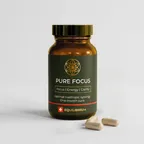
Applied to our Pure Focus formula, the grid gives this: nine ingredients at declared doses for 3 capsules, with no proprietary blend.
| Ingredient | Dose in Pure Focus | Dose studied (benchmark) |
|---|---|---|
| Lion’s Mane (fruiting body) | 1,000 mg | Powder: 1.8 to 3 g; extract: 500 to 1,000 mg |
| Citicoline | 250 mg | 250 to 500 mg |
| L-theanine | 200 mg | 100 to 200 mg |
| Bacopa monnieri (50% bacosides) | 200 mg | About 300 mg |
| Rhodiola rosea | 180 mg | 200 to 600 mg |
| Ginkgo biloba | 120 mg | 120 to 240 mg |
| Vitamin B6 | 2 mg (143% NRV) | – |
| Folate (B9) | 500 µg (250% NRV) | – |
| Vitamin B12 | 500 µg (20,000% NRV) | – |
Some doses are within the range of the studies, others below (bacopa, rhodiola): this is the trade-off of a multi-ingredient formula. Vitamins B6, B12 and folate contribute to the reduction of tiredness and fatigue and to normal psychological function. Pure Focus is made in Switzerland, vegan, caffeine-free, at CHF 99.90 a month (CHF 3.33 a day), CHF 84.90 on subscription (CHF 2.83 a day) or CHF 249.70 for the 3-month course (CHF 2.77 a day).
Precautions
- Pregnancy and breastfeeding: ask your doctor for advice, data are lacking for most herbs.
- Anticoagulants and antiplatelet drugs: ginkgo may increase the risk of bleeding. Talk to your doctor.
- Current treatments (antidepressants, antidiabetics, thyroid): ask your doctor or pharmacist for advice.
- Bipolar disorder: rhodiola is not recommended.
- Persistent difficulties with concentration, memory or sleep: see a doctor. No supplement is a treatment.
Article published on 23 November 2026 by the Swiss Equilibrium team. This article reports on the state of research and does not replace the advice of a doctor or pharmacist. Food supplements are not a substitute for a varied and balanced diet.
Frequently asked questions
What is the best natural nootropic?
There is no serious winner. Only certain nutrients, such as vitamins B6, B12 and folate, have authorised claims linked to tiredness and psychological function. For herbs and mushrooms, research remains limited and no claim is authorised.
Are online reviews of nootropics reliable?
With caution. Many "review" sites are paid per sale. Look instead at the declared composition, the doses compared with those in studies and the real price per day.
Is it better to take a single ingredient or a complete formula?
A single ingredient lets you know exactly what you take. A formula brings several ingredients together in one serving. In both cases, what matters is that each dose is shown.
Do natural nootropics have side effects?
They are generally well tolerated at usual doses, but some come with precautions: ginkgo with anticoagulants, bacopa for digestion, rhodiola in bipolar disorder. Ask for advice if you are on treatment.
How much does a natural nootropic cost per day in Switzerland?
From a few tens of centimes for a single ingredient (creatine, L-theanine) to roughly CHF 2 to 4 a day for a complete formula. Always calculate the price for the stated daily dose, not per capsule.
- Kongkeaw C. et al. (2014). Meta-analysis of randomized controlled trials on cognitive effects of Bacopa monnieri extract. Journal of Ethnopharmacology, 151(1), 528-535. https://pubmed.ncbi.nlm.nih.gov/24252493/
- Stough C. et al. (2001). The chronic effects of an extract of Bacopa monniera (Brahmi) on cognitive function in healthy human subjects. Psychopharmacology, 156(4), 481-484. https://pubmed.ncbi.nlm.nih.gov/11498727/
- Nakazaki E. et al. (2021). Citicoline and Memory Function in Healthy Older Adults: A Randomized, Double-Blind, Placebo-Controlled Clinical Trial. The Journal of Nutrition, 151(8), 2153-2160. https://pmc.ncbi.nlm.nih.gov/articles/PMC8349115/
- EFSA NDA Panel (2024). 'Citicoline' and support of the memory function: evaluation of a health claim pursuant to Article 13(5) of Regulation (EC) No 1924/2006. EFSA Journal, 22(7), e8861. https://www.ncbi.nlm.nih.gov/pmc/articles/PMC11222871/
- Haskell C.F. et al. (2008). The effects of L-theanine, caffeine and their combination on cognition and mood. Biological Psychology, 77(2), 113-122. https://pubmed.ncbi.nlm.nih.gov/18006208/
- Hidese S. et al. (2019). Effects of L-Theanine Administration on Stress-Related Symptoms and Cognitive Functions in Healthy Adults: A Randomized Controlled Trial. Nutrients, 11(10), 2362. https://pmc.ncbi.nlm.nih.gov/articles/PMC6836118/
- Mori K. et al. (2009). Improving effects of the mushroom Yamabushitake (Hericium erinaceus) on mild cognitive impairment: a double-blind placebo-controlled clinical trial. Phytotherapy Research, 23(3), 367-372. https://pubmed.ncbi.nlm.nih.gov/18844328/
- Docherty S. et al. (2023). The Acute and Chronic Effects of Lion's Mane Mushroom Supplementation on Cognitive Function, Stress and Mood in Young Adults. Nutrients, 15(22), 4842. https://www.mdpi.com/2072-6643/15/22/4842
- Hung S.K. et al. (2011). The effectiveness and efficacy of Rhodiola rosea L.: a systematic review of randomized clinical trials. Phytomedicine, 18(4), 235-244. https://pubmed.ncbi.nlm.nih.gov/21036578/
- Solomon P.R. et al. (2002). Ginkgo for memory enhancement: a randomized controlled trial. JAMA, 288(7), 835-840. https://doi.org/10.1001/jama.288.7.835
- Prokopidis K. et al. (2023). Effects of creatine supplementation on memory in healthy individuals: a systematic review and meta-analysis of randomized controlled trials. Nutrition Reviews, 81(4), 416-427. https://pmc.ncbi.nlm.nih.gov/articles/PMC9999677/