Rhodiola rosea: benefits, dosage and precautions
Share
In short: rhodiola (Rhodiola rosea), also called golden root or roseroot, is a plant of cold and mountainous regions, including the Alps. Its root has long been used in Scandinavia and Russia. It is classed among the so-called "adaptogens". Studies mainly look at stress-related fatigue: some observed less perceived fatigue and better attention after several weeks, but their quality varies. The usual dose is 200 to 600 mg of standardised extract per day, in the morning. It is not recommended in bipolar disorder, pregnancy or breastfeeding.
What is rhodiola?
Rhodiola rosea is a succulent (Crassulaceae family). It grows at high altitude and in arctic regions, including the Swiss Alps. Its root smells of roses when cut, hence its name. Extracts are usually standardised for two groups of compounds: rosavins (often 3%) and salidroside (often 1%).
The term "adaptogen" refers to a plant said to help the body cope with stress. It is not a recognised regulatory term, and no health claim is authorised for rhodiola in food supplements. Some rhodiola extracts are also sold in pharmacies as herbal medicines.
What do studies say about rhodiola?
| Study | Participants | What was observed |
|---|---|---|
| Olsson et al., 2009 (Planta Medica) | 60 adults with stress-related fatigue, 4 weeks | Lower fatigue scores and better attention than placebo, with a standardised extract (576 mg per day). |
| Hung et al., 2011 (Phytomedicine) | Systematic review of 11 trials | Encouraging results on physical and mental fatigue, but often methodologically weak studies. |
Key takeaway: rhodiola is a serious lead for stress-related fatigue, but the evidence remains limited. It replaces neither rest nor a medical visit if fatigue persists.
Rhodiola and mental fatigue
Stress-related mental fatigue (intense work periods, exams, overload) is the most studied context. If your fatigue lasts several weeks or comes with very low mood or other symptoms, talk to your doctor: burnout, a deficiency or a thyroid disorder may be the cause.
Rhodiola dosage
- Usual dose: 200 to 600 mg of standardised extract per day.
- Timing: in the morning or early in the day. Taken in the evening, it can disturb sleep.
- Duration: studies cover a few weeks. Breaks make sense for longer use.
Side effects and contraindications
Rhodiola is generally well tolerated. Possible side effects include irritability, nervousness, sleep problems and, more rarely, digestive discomfort. As a precaution:
- bipolar disorder: avoid;
- pregnancy and breastfeeding: avoid, as data are lacking;
- antidepressants, blood thinners, diabetes or blood pressure medication: talk to your doctor or pharmacist.
Rhodiola in Pure Focus
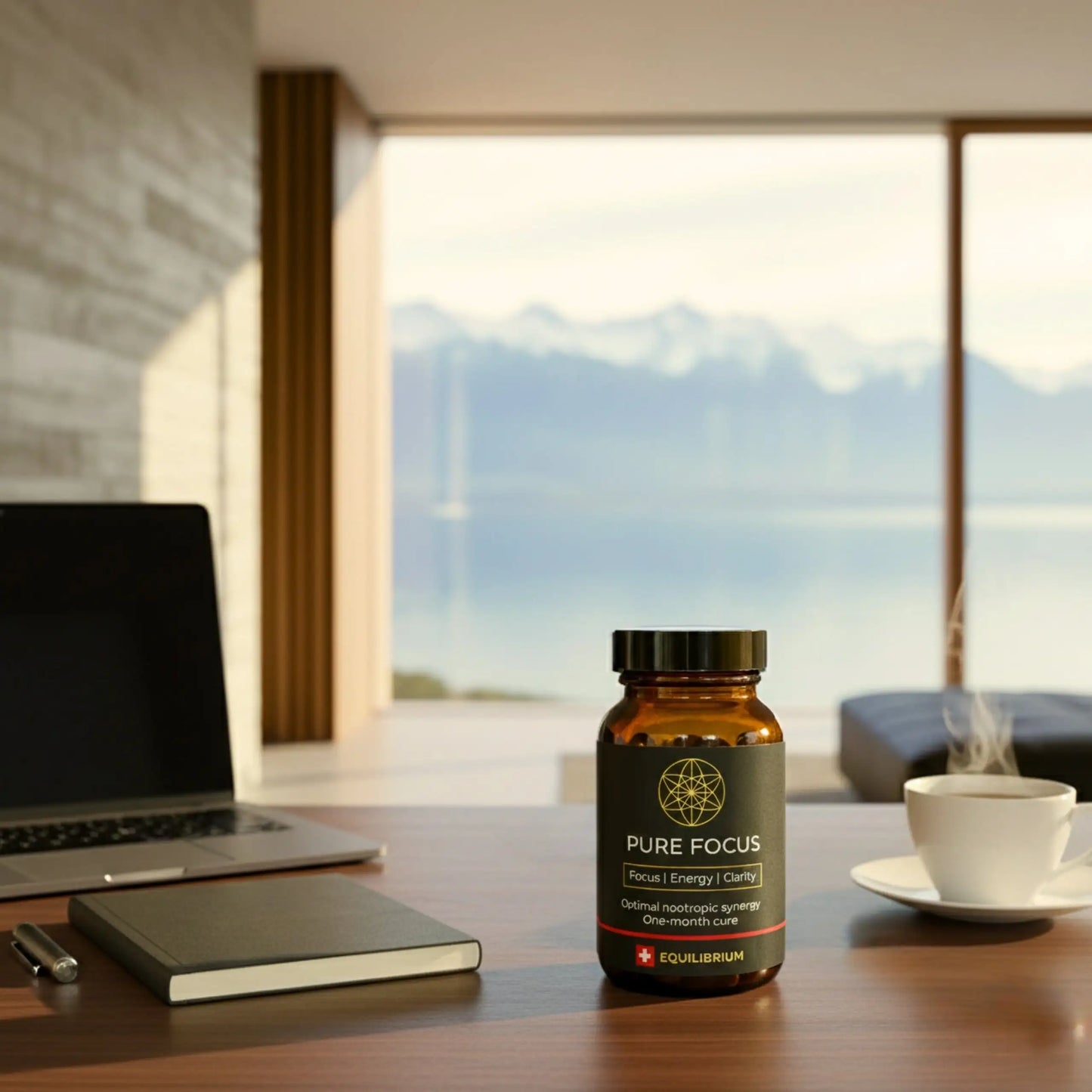
Our Pure Focus formula contains 180 mg of Rhodiola rosea per daily dose, combined with L-theanine (200 mg), bacopa (200 mg), Lion's Mane (1,000 mg), citicoline, ginkgo and vitamins B6, B9 and B12. The B vitamins contribute to the reduction of tiredness and fatigue and to normal psychological function. Pure Focus is made in Switzerland and vegan.
Frequently asked questions about rhodiola
What does rhodiola do?
It is mainly studied for stress-related fatigue. Some studies observed less perceived fatigue and better attention after several weeks, but study quality varies.
How much rhodiola should I take?
Usually 200 to 600 mg of standardised extract per day, in the morning. Follow the dose on the label.
Is rhodiola dangerous?
It is generally well tolerated, but not recommended in bipolar disorder, pregnancy or breastfeeding, and should be discussed with a doctor if you take antidepressants.
When should I take rhodiola?
In the morning or early in the day, so as not to disturb sleep.
Sources
- Olsson E.M. et al. (2009). A randomised, double-blind, placebo-controlled, parallel-group study of the standardised extract SHR-5 of the roots of Rhodiola rosea in the treatment of subjects with stress-related fatigue. Planta Medica, 75(2), 105-112. PubMed
- Hung S.K. et al. (2011). The effectiveness and efficacy of Rhodiola rosea L.: a systematic review of randomized clinical trials. Phytomedicine, 18(4), 235-244. PubMed
Published on 10 October 2026 by the Swiss Equilibrium team. This article reports on the state of research and does not replace advice from a doctor or pharmacist. Food supplements should not replace a varied and balanced diet.