Natural Nootropics: Definition, List, Risks and Choice
Natural nootropics: definition, list of ingredients and state of research, difference from medicines, risks and how to choose, with the Swiss legal status.
Updated 23 November 2026 · 7 min read

In short: a nootropic is a substance said to support cognitive functions (attention, memory, alertness); the word was coined in 1972 by the Romanian researcher Corneliu Giurgea. In Switzerland, natural nootropics (lion’s mane, bacopa, L-theanine, rhodiola, citicoline, creatine, B vitamins) are freely sold as food supplements, whereas piracetam, modafinil or methylphenidate are prescription-only medicines. Only certain nutrients have authorised claims, such as vitamins B6, B12 and folate, which contribute to the reduction of tiredness and fatigue; for herbs and mushrooms, research remains preliminary and no claim is authorised.
What is a nootropic? Definition
Corneliu Giurgea coined the term from the Greek “noos” (mind) and “tropein” (to turn towards). In everyday language it is now used for any product that aims to support concentration, memory or mental energy.
Note: “nootropic” is not a regulatory category. The term groups products of very different status, which we detail below. No nootropic replaces sleep, physical activity and a balanced diet.
What is the legal status of nootropics in Switzerland?
Under Swiss law, a product is either a medicine, authorised by Swissmedic under the Therapeutic Products Act, or a foodstuff, which includes food supplements, governed by food legislation and monitored by the cantons under the supervision of the FSVO (BLV). The word “nootropic” appears in neither of these texts.
| Category | Examples | Status in Switzerland | Where to buy |
|---|---|---|---|
| Vitamins and minerals | Vitamins B6, B12, folate, zinc, iron | Food supplement, authorised claims possible | Pharmacy, drugstore, supermarket, online |
| Herbs and mushrooms | Lion’s mane, bacopa, rhodiola, ginkgo | Food supplement, no cognitive claim authorised | Pharmacy, drugstore, online |
| Amino acids and related | L-theanine, citicoline, creatine | Food supplement; only creatine has a claim (physical performance) | Pharmacy, drugstore, online |
| Standardised ginkgo extract | Leaf extract tablets | Some products are medicines registered with Swissmedic | Pharmacy, drugstore |
| Racetams, modafinil, methylphenidate | Piracetam, modafinil, Ritalin | Prescription-only medicines | Only on prescription |
Three practical consequences:
- A supplement cannot claim to cure, treat or prevent a disease, nor claim an effect on memory or concentration for an herb.
- Ordering a prescription medicine online without a prescription exposes you to counterfeit or wrongly dosed products and may be illegal; Swissmedic regularly warns against such purchases.
- A supplement bought abroad must also comply with Swiss law: some ingredients authorised elsewhere are not authorised here, or not at the same dose.
We detail the rules, the ingredients concerned and good buying habits in nootropics in Switzerland: what is legal and where to buy.
List of the main natural nootropics and level of evidence
| Ingredient | What research looks at | Status |
|---|---|---|
| Vitamins B6, B9, B12 | Fatigue, psychological functions | Authorised claims: they contribute to the reduction of tiredness and fatigue and to normal psychological function; B6 and B12 contribute to the normal functioning of the nervous system |
| Creatine | Physical performance; role in the brain | Authorised claim for physical performance in successive bursts of short-term, high-intensity exercise (3 g/day). No authorised claim for cognition, mixed results |
| Bacopa monnieri | Memory, processing speed | No authorised claim: a meta-analysis of controlled trials exists, with modest results to be confirmed |
| Citicoline | Memory in older adults | No authorised claim: few human trials |
| L-theanine (+ caffeine) | Attention, combination with caffeine | No authorised claim: small studies, mostly short-term |
| Lion’s Mane | Nervous system, mood | No authorised claim: preliminary research, mostly in vitro and in animals, a few small trials |
| Rhodiola rosea | Stress | No authorised claim: studies of varying quality |
| Ginkgo biloba | Circulation, memory | No authorised claim in supplements: contradictory results in healthy adults |
To compare these ingredients with one another (studied doses, level of evidence, price), read our comparison of natural nootropics. To go further on some ingredients: our article on citicoline, our complete guide to Lion’s Mane and our guide to creatine.
Nootropics and medicines: do not confuse them
Part of the online content about “nootropics” is actually about medicines:
- Racetams (piracetam and derivatives): in Switzerland, piracetam is a prescription-only medicine.
- Modafinil: prescribed for certain sleep disorders, prescription-only.
- Methylphenidate: a treatment for ADHD, prescription-only and under medical supervision.
Ordering these products on the internet without a prescription is illegal and dangerous: unknown composition, uncertain dosage, side effects and interactions. If you think you have an attention disorder, talk to your doctor: no food supplement is a treatment for ADHD.
Are nootropics dangerous?
Natural nootropics are generally well tolerated at usual doses, but “natural” does not mean “risk-free”:
- Ginkgo biloba: may increase the risk of bleeding with anticoagulants and antiplatelet drugs (aspirin). To be avoided before an operation.
- Bacopa: can cause digestive upset. Take with a meal.
- Rhodiola: not recommended in bipolar disorder, may disturb sleep if taken in the evening.
- Lion’s Mane: avoid if you are allergic to mushrooms.
- Pregnancy and breastfeeding: ask your doctor for advice, data are lacking for most ingredients.
- Ongoing treatment: antidepressants, anticoagulants, antidiabetics or thyroid treatment, talk to your doctor or pharmacist.
How to choose a nootropic supplement
- Declared doses: beware of “proprietary blends” that do not give the amount of each ingredient.
- Compliant claims: only authorised claims (for example for B vitamins or creatine) can appear on a supplement; a promise about memory or concentration for an herb is a warning sign.
- Standardised extracts: bacoside content for bacopa, polysaccharide content for Lion’s Mane.
- No miracle promises: “boosted IQ”, “guaranteed immediate effect” or “replaces your coffee” are warning signs.
- Controlled manufacturing: place of manufacture stated, analyses available.
We detail this method in Focus supplements: how to choose well, and how to combine several ingredients in Combining Lion’s Mane, creatine and nootropics. Familiar with Mind Lab Pro or Noocube? We compare them with a Swiss-made formula in Mind Lab Pro: which alternative in Switzerland?
Our approach at Swiss Equilibrium
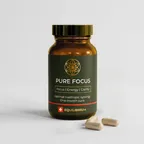
Our Pure Focus formula brings together nine active ingredients with their doses shown: Lion’s Mane (1,000 mg), citicoline (250 mg), bacopa monnieri (200 mg), L-theanine (200 mg), rhodiola rosea (180 mg), ginkgo biloba (120 mg) and vitamins B6, B9 and B12. Vitamins B6, B9 and B12 contribute to normal psychological function and to the reduction of tiredness and fatigue. The formula is made in Switzerland, vegan, and contains no caffeine.
Prefer a single ingredient? Our organic Lion’s Mane and our creatine monohydrate are also available separately.
Article updated on 23 November 2026 by the Swiss Equilibrium team. This article reports on the state of research and does not replace the advice of a doctor or pharmacist. Food supplements do not replace a varied and balanced diet.
Frequently asked questions
What is the most powerful nootropic?
There is no serious answer to this question. The substances with the most marked effects are medicines, with side effects and a prescription. Among supplements, only certain vitamins and minerals (such as vitamins B6, B12 and folate, which contribute to the reduction of tiredness and fatigue) have authorised claims linked to psychological or nervous system function.
Can you buy nootropics without a prescription in Switzerland?
Yes for food supplements (Lion's Mane, bacopa, L-theanine, creatine, B vitamins). No for medicines such as piracetam, modafinil or methylphenidate.
How long does it take to feel an effect?
We promise neither an effect nor a timeframe. For information only, studies on bacopa, citicoline or Lion's Mane lasted 4 to 16 weeks, but this work remains preliminary and does not concern our products.
Do nootropics help with ADHD?
No food supplement is a treatment for ADHD. If you have significant attention difficulties, see a doctor, who can make a diagnosis and suggest suitable support.
Can you take nootropics every day?
Most natural nootropics have been studied as a daily intake over several weeks. Follow the dose stated on the label and ask for advice if you are on medical treatment.
- Kongkeaw C. et al. (2014). Meta-analysis of randomized controlled trials on cognitive effects of Bacopa monnieri extract. Journal of Ethnopharmacology, 151(1), 528-535. https://pubmed.ncbi.nlm.nih.gov/24252493/
- Nakazaki E. et al. (2021). Citicoline and Memory Function in Healthy Older Adults: A Randomized, Double-Blind, Placebo-Controlled Clinical Trial. The Journal of Nutrition, 151(8), 2153-2160. https://pmc.ncbi.nlm.nih.gov/articles/PMC8349115/
- Haskell C.F. et al. (2008). The effects of L-theanine, caffeine and their combination on cognition and mood. Biological Psychology, 77(2), 113-122. https://pubmed.ncbi.nlm.nih.gov/18006208/
- Prokopidis K. et al. (2023). Effects of creatine supplementation on memory in healthy individuals: a systematic review and meta-analysis of randomized controlled trials. Nutrition Reviews, 81(4), 416-427. https://pmc.ncbi.nlm.nih.gov/articles/PMC9999677/
- Mori K. et al. (2009). Improving effects of the mushroom Yamabushitake (Hericium erinaceus) on mild cognitive impairment. Phytotherapy Research, 23(3), 367-372. https://pubmed.ncbi.nlm.nih.gov/18844328/