Best Lion's Mane in Switzerland: The Comparison
Which lion's mane should you choose in Switzerland? A quality comparison of several brands (Nutri&Co, Sunday Natural, French Mush…): part used, standardisation, daily extract content, origin and testing.
Updated 22 November 2026 · 8 min read
In short: there is no “best” lion’s mane in any official sense, and no product can claim an effect: no health claim is authorised for this mushroom in Switzerland. What you can compare is quality, on verifiable facts: the part of the mushroom (fruiting body or mycelium), the form (powder or extract), the declared standardisation, the daily extract content, organic certification, testing and origin. Most of the brands visible online are French or German and ship from abroad.
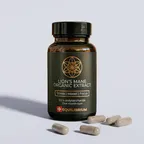
On this checklist, our organic lion’s mane ticks every box: a 1:15 extract of 100% fruiting body, with no mycelium, standardised to 30% polysaccharides, 1,000 mg of extract a day, organic, tested for heavy metals and made in Switzerland.
Transparency: this comparison is written by Swiss Equilibrium, which sells one of the products compared. Information on the other brands comes from their public pages in November 2026 and may have changed. Check it on each brand’s website before buying.
The comparison checklist
We compare each product on the same six criteria, with no overall score:
- Part used: fruiting body, mycelium or a blend. See fruiting body or mycelium.
- Form: raw powder or extract. See capsules or powder.
- Standardisation: what is measured (polysaccharides or beta-glucans) and the percentage.
- Daily extract dose at the serving recommended by the brand.
- Origin and manufacture: where the mushroom is grown, where the product is made.
- Testing and buying in Switzerland: contaminant testing, compliant label, shipping from Switzerland or from abroad.
The comparison
| Criterion | Swiss Equilibrium | Nutri&Co | Sunday Natural | French Mush |
|---|---|---|---|---|
| Part used | 100% fruiting body | Fruiting body | Fruiting body (including the stem) | 100% fruiting body |
| Form | 1:15 extract | Extract (ultrasonic process, solvent-free) | Hot-water extract | Extract |
| Declared standardisation | 30% polysaccharides | ≥ 70% beta-glucans | 30% polysaccharides | Beta-glucans (about 24%, according to the batch sheet) |
| Extract per capsule | 500 mg | 200 mg | 500 mg | 400 mg |
| Recommended serving | 2 capsules a day | 1 capsule a day (up to 3) | 2 capsules a day | 2 capsules a day |
| Extract per day | 1,000 mg | 200 mg | 1,000 mg | 800 mg |
| Organic | Yes | Yes | Yes (EU) | Yes |
| Declared origin | Made in Switzerland | Extract supplied by an American producer, encapsulated in France | Mushroom grown in Fujian (China) | Mushroom of European origin |
| Tested for heavy metals | Yes, every batch | See website | See website | See website |
| Made in Switzerland | Yes | No | No | No |
| Buying from Switzerland | Delivered from Switzerland within 48 hours | Delivered from France | Delivered from Germany | French online pharmacies, resellers (including Galaxus) |
What the table shows: our lion’s mane combines the highest daily extract content in the comparison (1,000 mg, level with Sunday Natural) with a 100% fruiting body extract that is organic, tested and made in Switzerland. It is the only one of the four produced in Switzerland.
What the figures do not tell you
Two pitfalls come up in every lion’s mane comparison.
A percentage on its own means nothing. “70% beta-glucans” in 200 mg of extract and “30% polysaccharides” in 1,000 mg of extract describe neither the same measurement nor the same quantity. Beta-glucans are a sub-family of polysaccharides and are measured with a specific enzymatic method. Total polysaccharides include other carbohydrates. Multiplying the dose by the percentage to pick a winner therefore mixes two different quantities.
More compounds does not mean more effect. There is no authorised health claim for lion’s mane, and human studies concern products different from those on sale. A standardisation is there to check that a product contains what it says, batch after batch, not to promise a result.
How to choose
- You want a 100% fruiting body extract, organic, with a generous content and a clear standardisation: that is exactly the specification of our lion’s mane, 1,000 mg of 1:15 extract at 30% polysaccharides per day.
- You want a product made in Switzerland, with a label that complies with Swiss law and shipped from Switzerland: Swiss Equilibrium is the only brand in this comparison that fits.
- You prefer a very small daily dose standardised for beta-glucans: a highly concentrated extract at 1 capsule a day, such as Nutri&Co’s, meets this criterion.
- You want an analysis sheet with several compounds detailed: our comparison with French Mush goes into this: French Mush vs Swiss Equilibrium.
In any case, avoid products that do not say which part of the mushroom they contain, that show no standardisation or that promise an effect on memory or focus: such promises are prohibited in Switzerland.
Our lion’s mane in detail
| Criterion | Swiss Equilibrium Lion’s Mane |
|---|---|
| Part used | 100% fruiting body, with no mycelium or grain substrate |
| Extract | 1:15 ratio, standardised to 30% polysaccharides (certificate of analysis per batch) |
| Content | 2 capsules a day, 1,000 mg of extract |
| Testing | Organic, tested for heavy metals |
| Manufacture | In Switzerland, vegetable capsules, vegan, gluten-free, GMO-free |
| Service | Delivered from Switzerland within 48 hours, 60-day money-back guarantee |
To find out where to buy lion’s mane near you or online, see Where to buy lion’s mane in Switzerland. For dosage: Lion’s mane: dosage and daily dose.
Article written by the Swiss Equilibrium team, which makes one of the products compared. Ask your doctor or pharmacist for advice if you are on medication; not recommended during pregnancy and breastfeeding. Food supplements are not a substitute for a varied and balanced diet and a healthy lifestyle.
Frequently asked questions
What is the best lion's mane in Switzerland?
There is no official ranking. The verifiable quality criteria are the part of the mushroom (fruiting body or mycelium), the declared standardisation, the daily extract content, organic certification, contaminant testing and origin. Swiss Equilibrium lion's mane meets these criteria: an organic 100% fruiting body 1:15 extract, 30% polysaccharides, 1,000 mg of extract a day, tested for heavy metals and made in Switzerland.
Can you compare a lion's mane with 30% polysaccharides and another with 70% beta-glucans?
Not directly. Beta-glucans are a sub-family of polysaccharides and are measured by different methods. What is more, a percentage tells you nothing without the amount of extract taken per day. Compare the part used, the measurement method and the daily dose together.
What about Nutri&Co lion's mane?
According to its public information, it is an organic fruiting body extract standardised to at least 70% beta-glucans, at 200 mg of extract per capsule and 1 capsule a day, with an extract of American origin encapsulated in France. The amount of extract per day is 200 mg, compared with 1,000 mg for Swiss Equilibrium lion's mane.
What about Sunday Natural lion's mane?
According to its public information, it is a hot-water fruiting body extract, standardised to 30% polysaccharides, at 1,000 mg a day (2 capsules), made from mushrooms grown in Fujian province, China, and sold from Germany.
Is Swiss Equilibrium lion's mane made in Switzerland?
Yes. It is an organic 1:15 fruiting body extract, standardised to 30% polysaccharides, with no mycelium or grain substrate, tested for heavy metals, at 2 capsules (1,000 mg of extract) a day. It is made in Switzerland and shipped from Switzerland.
- Nutri&Co. Lion's Mane, product information (accessed November 2026). https://nutriandco.com/fr/produits/lions-mane
- Sunday Natural. Bio Hericium Extrakt Kapseln (accessed November 2026). https://www.sunday.de/bio-hericium-extrakt-kapseln-set.html
- McCleary B. V., Draga A. (2016). Measurement of β-Glucan in Mushrooms and Mycelial Products. Journal of AOAC International, 99(2), 364-373. https://pubmed.ncbi.nlm.nih.gov/26957216/
- Friedman M. (2015). Chemistry, Nutrition, and Health-Promoting Properties of Hericium erinaceus (Lion's Mane) Mushroom Fruiting Bodies and Mycelia and Their Bioactive Compounds. Journal of Agricultural and Food Chemistry, 63(32), 7108-7123. https://pubs.acs.org/doi/10.1021/acs.jafc.5b02914