Lion's Mane Side Effects: Is It Safe? Risks and Precautions
Is lion's mane dangerous? Reported side effects, contraindications, drug interactions and precautions. Clear safety guide for readers in Switzerland.
Updated 10 October 2026 · 4 min read
In short: in human clinical trials, lion’s mane (Hericium erinaceus) was well tolerated. Reported side effects are rare and mild: digestive discomfort, nausea, skin reactions in a few people. Avoid it if you are allergic to mushrooms, and ask a doctor for advice during pregnancy, breastfeeding or if you are on treatment (anticoagulant, diabetes, immunosuppressant), because data are lacking. Studies did not go beyond 16 weeks. The main concrete risk on the market is product quality: choose a tested extract.
What side effects have been reported?
| Effect | Frequency | What to do |
|---|---|---|
| Digestive discomfort, bloating, nausea | Rare | Take with a meal, reduce the dose for a few days. |
| Skin reactions (itching, rash) | Rare, mostly in people sensitive to mushrooms | Stop taking it and ask for medical advice. |
| Allergic reaction, breathing difficulty | Very rare, a few isolated cases described | Stop immediately and see a doctor. In an emergency, call 144. |
In published trials (Mori 2009, Nagano 2010, Docherty 2023), the authors did not report any serious side effect linked to lion’s mane. These studies remain small (30 to 50 people) and short (4 to 16 weeks), which does not allow very rare effects to be detected.
Contraindications and precautions
- Mushroom allergy: avoid.
- Pregnancy and breastfeeding: no data. As a precaution, ask your doctor.
- Children and teenagers: not studied, reserved for adults.
- Planned surgery: tell your doctor, as a precaution, because of laboratory data on blood clotting.
Possible interactions with medicines
No interaction has been demonstrated in humans. Laboratory and animal work nevertheless calls for caution in three cases:
- Anticoagulants and antiplatelet drugs (warfarin, daily aspirin, etc.): some molecules from the mushroom showed an effect on platelet aggregation in the laboratory.
- Diabetes treatment: animal studies suggest an effect on blood sugar.
- Immunosuppressants: the mushroom’s polysaccharides are studied for their action on the immune system.
If you are on one of these treatments, talk to your doctor or pharmacist before starting, and never stop a treatment on your own.
The real risk: product quality
Mushrooms easily absorb what is in their substrate (heavy metals, pesticides). And many “mycelium” products are mostly made of the grain the mushroom grew on. To limit risks:
- prefer a fruiting body extract, with a stated polysaccharide content;
- choose an organic product;
- check that analyses (heavy metals, contaminants) are available;
- buy from an identifiable brand, with an address and customer service.
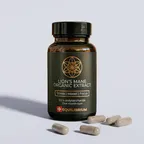
Our Lion’s Mane Organic Extract is an organic fruiting body extract, standardised to 30% polysaccharides, tested for heavy metals and made in Switzerland.
How to start gently
- Start with half the dose in the first week.
- Take it with a meal.
- Introduce only one new supplement at a time, so you know where any effect comes from.
- Stop if you notice an unusual reaction.
For the dose and timing, read Lion’s mane dosage, and for an overview, our complete guide to lion’s mane.
Article updated on 10 October 2026 by the Swiss Equilibrium team. This article is for information only and does not replace the advice of a doctor or pharmacist. Food supplements do not replace a varied, balanced diet.
Frequently asked questions
Is lion's mane dangerous?
In published studies it was well tolerated, with rare, mild side effects. Avoid it if you are allergic to mushrooms and ask for medical advice if you are pregnant or on treatment.
Does lion's mane affect the liver?
No effect on the liver has been reported in published clinical trials. If you have liver disease, ask your doctor before taking any supplement.
Can I take it long term?
Studies lasted up to 16 weeks. Beyond that, data are lacking: talk to your doctor about very prolonged use.
Can lion's mane stop you sleeping?
It is not a stimulant. If you notice disturbed sleep, take it in the morning.
What should I do if I get an unpleasant effect?
Stop taking it. If the symptom persists or is significant, see a doctor.
- Mori K. et al. (2009). Improving effects of the mushroom Yamabushitake (Hericium erinaceus) on mild cognitive impairment: a double-blind placebo-controlled clinical trial. Phytotherapy Research, 23(3), 367-372. https://pubmed.ncbi.nlm.nih.gov/18844328/
- Nagano M. et al. (2010). Reduction of depression and anxiety by 4 weeks Hericium erinaceus intake. Biomedical Research, 31(4), 231-237. https://www.jstage.jst.go.jp/article/biomedres/31/4/31_4_231/_article
- Docherty S. et al. (2023). The Acute and Chronic Effects of Lion's Mane Mushroom Supplementation on Cognitive Function, Stress and Mood in Young Adults. Nutrients, 15(22), 4842. https://www.mdpi.com/2072-6643/15/22/4842