Swiss Made Supplements: 6 Criteria to Check (2026)
Swiss made supplements: check place of manufacture, analyses, doses, claims and a Swiss address. A criteria checklist with red flags to spot.
Updated 23 November 2026 · 5 min read
In short: a good Swiss supplement is recognised by six things you can check: the place of manufacture (country of production on the label), batch analyses available on request, declared doses for each active ingredient, claims that comply with the official list, a Swiss address for the responsible company and a consistent price per day. Displayed Swiss origin is regulated by law, but it does not replace these checks.
The Swiss market has several hundred food supplement brands. Many are foreign and simply distributed in Switzerland. This guide gives you a method to sort through them, whether you buy in a pharmacy, a drugstore or online.
Which brands are really Swiss?
Three categories coexist:
- Foreign brands distributed in Switzerland: the majority. EU, US or Asian origin, sometimes with Swiss packaging or labelling.
- Swiss brands with outsourced production: brand, formulation and head office in Switzerland, but manufacturing outside Switzerland.
- Brands made in Switzerland: production and controls on Swiss soil. This is the minority.
All three can offer good products. What matters is that the brand says clearly which category it belongs to, and that you can verify it.
Which criteria should you check?
| Criterion | Where to check | What should reassure you | Red flag |
|---|---|---|---|
| Place of manufacture | Label (country of production), brand website | Country of production stated; place of manufacture specified | “Swiss made” with no country of production or explanation |
| Analyses | Quality page, customer service | Batch analysis (contaminants, heavy metals, content), certificate on request | No answer, or “confidential analyses” |
| Declared doses | Nutrition table on the label | Amount of each active ingredient for the daily dose, titration of extracts | “Proprietary blend” with a single total |
| Compliant claims | Label, product page, advertising | Official wording, tied to a nutrient (e.g. vitamins B6, B12 and folate: reduction of tiredness and fatigue) | “Boosts memory”, “anti-stress”, “prevents decline” |
| Swiss address | Label, website legal notice | Name and postal address of a company in Switzerland, reachable | Only an email address or a PO box abroad |
| Price per day | Price ÷ number of days at the stated dose | Price consistent with the doses and controls | Very low price obtained with token doses |
Place of manufacture
In Switzerland, the label of a foodstuff must state the country of production. This is the simplest piece of information to verify. The use of the Swiss cross and of statements such as “made in Switzerland” is also governed by the “Swissness” legislation, which requires in particular that the essential processing step takes place in Switzerland. For ingredients that do not grow in Switzerland (bacopa, Asian mushrooms, etc.), it is normal for the raw material to be imported: what matters is that the brand says so.
Analyses
A serious manufacturer tests every batch: identity and content of the active ingredient, contaminants (heavy metals, micro-organisms, residues). Ask for the certificate of analysis (COA) for the batch you bought: the answer, and how long it takes, say a lot.
Declared doses and standardisation
Every active ingredient must have its dose, and plant or mushroom extracts their level of active compound (bacosides for bacopa, polysaccharides or beta-glucans for mushrooms, purity for creatine). Without these figures, comparison is impossible.
Compliant claims
Health claims are governed by the FDHA Ordinance on Food Information (OIDAl): only authorised claims may be used, and no supplement may claim to prevent or treat a disease. For herbs, no claim about memory or concentration is authorised. A brand that follows these rules is not less ambitious: it is more reliable.
Swiss address
The person responsible for the product must be identifiable on the label. A Swiss address guarantees you a contact subject to Swiss law, and customer service you can reach if there is a problem. It also avoids the customs fees and VAT surprises of ordering from abroad.
The categories where origin matters most
- Mushrooms (lion’s mane, reishi): the part used (fruiting body or mycelium) and heavy metal testing are decisive.
- Multi-active formulas: the more ingredients there are, the more important transparency on doses becomes.
- Creatine: purity and the absence of contaminants are checked by analysis.
- Vitamins and minerals: the dosage should stay reasonable relative to the nutrient reference values (NRV).
Pharmacy, drugstore or online?
Pharmacies and drugstores (drogerie) offer valuable advice, especially if you are on treatment. You also find products there that are not supplements but medicines (certain ginkgo extracts, for example). We detail this difference and what is available over the counter in our article on focus supplements in pharmacies. Online, apply the same checklist: if information is missing, ask for it.
Our approach
Swiss Equilibrium applies this checklist to its own products: made in Switzerland, every batch laboratory-tested before shipping, every dose shown with no proprietary blend and only authorised claims. Our Lion’s Mane is an organic fruiting body extract (1:15, 30% polysaccharides), our creatine a 99.9% pure monohydrate. The details (manufacturing, analyses, choice of ingredients) are on the our approach page.
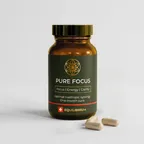
Example of price per day: Pure Focus (9 active ingredients, 3 capsules a day) works out at CHF 3.33 a day as a one-off purchase and CHF 2.83 a day on subscription.
Precautions
Food supplements do not replace a varied and balanced diet or a healthy lifestyle. Ask your doctor or pharmacist for advice if you are on treatment, if you are pregnant or breastfeeding, and before giving a supplement to a child. Do not exceed the daily dose stated on the label.
The “best Swiss supplement” is neither the most expensive nor the one with the most visible origin: it is the one that passes the six criteria above. → Our range made in Switzerland.
Frequently asked questions
Is there a "Swiss made" label for supplements?
There is no official label certified by a body, as there is for some organic products. However, the indication of Swiss origin is governed by the "Swissness" legislation: it must be accurate, and the label must state the country of production. It is therefore a claim to check, not an automatic guarantee.
How much does a genuinely Swiss supplement cost?
Often a little more than a mid-range European brand, notably because of production and testing costs in Switzerland. Always compare the price per day at the stated dose.
Must a food supplement be authorised before being sold in Switzerland?
No, with some exceptions (novel ingredients in particular). The manufacturer or importer is responsible for the compliance of its product, and cantonal laboratories carry out spot checks. This is why verifiable criteria (analyses, address, doses) matter.
Is it better to buy in a pharmacy or online?
Both can be reliable. Pharmacies and drugstores provide advice, which is useful if you are on treatment. Online, favour brands that show their Swiss address, their doses and their analyses.