Creatine and the Brain: What the Research Really Says
Creatine and the brain: energy metabolism, sleep deprivation, vegetarians. What studies show, their limits, and what is authorised in Switzerland.
Updated 23 November 2026 · 8 min read
In short: the brain uses creatine as a quick energy reserve, as muscles do. Research is therefore looking at its role in brain energy metabolism, in particular during sleep deprivation or in vegetarians, with mixed results. To date, no claim on concentration, memory or the brain is authorised in Switzerland: the only recognised effect is that creatine increases physical performance in short, high-intensity exercise, with 3 g a day.
Why are researchers interested in creatine and the brain?
The brain accounts for about 2% of body weight but uses a large share of its energy. To work, its cells need ATP, the molecule that serves as “energy currency”. Creatine, in the form of phosphocreatine, allows this ATP to be recharged very quickly. It is the same mechanism as in muscles during a sprint.
The brain makes part of its own creatine and also receives some through the blood. Hence a logical question: if you raise intake, do the brain’s stores go up, and does it change anything about mental functioning?
A 2019 review (Dolan et al.) offers two cautious pieces of an answer. First, the brain’s creatine stores seem to respond to supplementation, but much less than those of muscles, and higher or longer doses may be needed to raise them. Second, if an effect exists, it would be seen mainly when the brain is put under stress, for example during sleep deprivation.
For the basics on creatine itself, see our article Creatine: benefits and what studies say.
What do studies show on creatine and cognition?
The first trials: encouraging but fragile results
In 2003, an Australian trial in 45 young vegetarian or vegan adults observed better scores on working memory and reasoning tests after six weeks of creatine, compared with placebo (Rae et al.). The study was well designed (double-blind, crossover), but small, and limited to a group whose starting stores are lower.
In 2011, a British study in 121 young women tested a high dose over five days. It found no effect on verbal fluency or vigilance. An effect on memory was observed in vegetarian women, but not in omnivores (Benton and Donohoe). The authors themselves judged their results too preliminary to conclude.
A larger trial in 2023: an effect, if there is one, would be small
In 2023, a team published in BMC Medicine a randomised, double-blind, crossover trial in 123 young adults, roughly half vegetarian and half omnivore (Sandkühler et al.). The researchers expected a stronger effect in vegetarians. They found none. Their conclusion, taking the existing literature into account: creatine might have a small effect, to be confirmed. They also note that side effects (mostly digestive) were reported more often with creatine than with placebo.
Sleep deprivation: a very specific study
In 2024, a German study published in Scientific Reports followed 15 young adults in a laboratory, during a night almost without sleep (Gordji-Nejad et al.). A single very high dose of creatine (0.35 g per kg of body weight, about 25 g for a 70 kg person) was associated with changes in brain energy metabolism measured by spectroscopy, and with better scores on some tests compared with placebo.
This result is interesting for research, but it does not carry over to everyday life: the sample is very small, the dose is close to ten times the usual dose, and the lead researcher himself advised against repeating this protocol at home because of the load on the kidneys. Long-term effects in chronic sleep deprivation remain unknown. Creatine does not replace sleep.
Reviews and meta-analyses: cautious conclusions
| Publication | What was studied | What it concludes | Limits |
|---|---|---|---|
| Avgerinos et al., 2018 | 6 trials, 281 healthy adults | Signals on short-term memory and reasoning, mainly in some subgroups | Few, heterogeneous studies |
| Dolan et al., 2019 | Review of data on brain creatine | Brain stores less responsive than muscles; possible effect mainly under stress | Little human data |
| Prokopidis et al., 2023 | Meta-analysis on memory | Effect observed on memory, stronger in older people | Statistical method criticised by other researchers |
| Xu et al., 2024 | Meta-analysis of randomised trials in adults | Effect on memory with certainty judged moderate; low certainty for attention and processing speed; no significant effect on overall cognition or executive function | The authors call for larger trials |
Key takeaway: research is active and some signals deserve to be followed, in particular on memory. But studies are often small, protocols very different (dose, duration, population, tests), and results do not all point the same way. No authority has recognised an effect of creatine on concentration or memory.
What can legally be said about creatine in Switzerland?
In Switzerland as in the European Union, a health claim may only be used if it is on the official list. For creatine, the reference claim concerns physical performance:
Creatine increases physical performance in successive bursts of short-term, high intensity exercise. The beneficial effect is obtained with a daily intake of 3 g of creatine.
No claim exists for the brain, concentration, memory, mental fatigue or mood. A brand that presents its creatine as a product “for the brain” or “for focus” goes beyond what the regulations allow. We claim no effect of our creatine on the brain.
Taking creatine without playing sport: what is the point?
This is one of the most frequent questions, particularly among people who work mostly seated and have read articles on creatine and the brain.
What can honestly be said:
- It is possible for a healthy adult: creatine monohydrate is one of the most studied supplements, and it is considered safe at usual doses (Kreider et al., 2017). Precautions are detailed in Creatine: side effects.
- But its only recognised effect assumes short, intense physical activity: weight training, sprints, racket or team sports. Without this type of effort, its benefit is not established.
- The best use therefore remains combined with physical activity. Two or three strength sessions a week also have their own benefit for general health.
On timing, what matters is regularity, every day, including non-training days. The time of day matters little: our article When to take creatine takes stock. For women-specific points, see Creatine for women: myths and facts.
How do I choose a creatine if I want to try?
- Form: creatine monohydrate, the most studied. More expensive forms have not shown superiority.
- Dose: 3 g a day, the reference dose of the official claim. No loading phase needed.
- Purity: no additives, sugars or flavourings.
- Be wary of products that promise effects on the brain or concentration: this is not authorised.
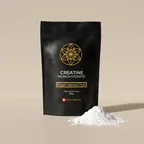
Our Creatine Monohydrate is 99.9% pure, micronised 200 mesh, with no additives, vegan and made in Switzerland. One pouch lasts a month at 3 g a day, for CHF 19.90 as a one-off purchase, or CHF 16.90 a month on a no-commitment subscription (about CHF 0.56 a day).
Precautions
In healthy adults, creatine monohydrate is considered safe at usual doses. Ask your doctor for advice before taking it if you have kidney disease, are on treatment, or are pregnant or breastfeeding. Creatine is not recommended for children. Mention that you take creatine before a blood test: it can raise creatinine without any kidney problem. Do not exceed the stated dose and do not repeat the very high doses used in some laboratory studies.
If you have persistent concentration or memory difficulties, or unusual tiredness, talk to your doctor rather than looking for a solution in a supplement.
Article published on 23 November 2026 by the Swiss Equilibrium team. This article reports on the state of research. It does not replace the advice of a doctor or pharmacist. Food supplements are not a substitute for a varied and balanced diet.
Frequently asked questions
Does creatine improve focus?
No claim is authorised in Switzerland or the European Union on creatine and concentration or memory. Studies are looking into it, with mixed results and often low levels of evidence.
Can I take creatine without exercising?
Yes, a healthy adult can take it without playing sport. But the only recognised effect concerns performance in short, intense exercise: without physical activity, its benefit is not established.
What dose of creatine for the brain?
There is no recommended dose for the brain, since no cognitive effect is recognised. The only official reference dose is 3 g a day, for physical performance.
Do vegetarians have more reason to take creatine for the brain?
Their starting muscle stores are often lower. A 2011 study observed an effect on memory in vegetarian women, but a larger 2023 trial found no difference between vegetarians and omnivores.
Does creatine help when you lack sleep?
A small 2024 study tested a single very high dose during a night without sleep, in a laboratory. Its authors advise against repeating this protocol at home, and the result allows no recommendation.
- Dolan E., Gualano B., Rawson E.S. (2019). Beyond muscle: the effects of creatine supplementation on brain creatine, cognitive processing, and traumatic brain injury. European Journal of Sport Science, 19(1), 1-14. https://pubmed.ncbi.nlm.nih.gov/30086660/
- Rae C. et al. (2003). Oral creatine monohydrate supplementation improves brain performance: a double-blind, placebo-controlled, cross-over trial. Proceedings of the Royal Society B, 270(1529), 2147-2150. https://pubmed.ncbi.nlm.nih.gov/14561278/
- Benton D., Donohoe R. (2011). The influence of creatine supplementation on the cognitive functioning of vegetarians and omnivores. British Journal of Nutrition, 105(7), 1100-1105. https://pubmed.ncbi.nlm.nih.gov/21118604/
- Sandkühler J.F. et al. (2023). The effects of creatine supplementation on cognitive performance: a randomised controlled study. BMC Medicine, 21, 440. https://pmc.ncbi.nlm.nih.gov/articles/PMC10647179/
- Gordji-Nejad A. et al. (2024). Single dose creatine improves cognitive performance and induces changes in cerebral high energy phosphates during sleep deprivation. Scientific Reports, 14, 4937. https://pubmed.ncbi.nlm.nih.gov/38418482/
- Avgerinos K.I. et al. (2018). Effects of creatine supplementation on cognitive function of healthy individuals: a systematic review of randomized controlled trials. Experimental Gerontology, 108, 166-173. https://pmc.ncbi.nlm.nih.gov/articles/PMC6093191/
- Prokopidis K. et al. (2023). Effects of creatine supplementation on memory in healthy individuals: a systematic review and meta-analysis of randomized controlled trials. Nutrition Reviews, 81(4), 416-427. https://pmc.ncbi.nlm.nih.gov/articles/PMC9999677/
- Xu C. et al. (2024). The effects of creatine supplementation on cognitive function in adults: a systematic review and meta-analysis. Frontiers in Nutrition, 11, 1424972. https://pubmed.ncbi.nlm.nih.gov/39070254/
- Kreider R.B. et al. (2017). International Society of Sports Nutrition position stand: safety and efficacy of creatine supplementation in exercise, sport, and medicine. Journal of the International Society of Sports Nutrition, 14, 18. https://doi.org/10.1186/s12970-017-0173-z