Creatine side effects: is creatine dangerous? What studies show
Share
In short: in healthy adults, creatine monohydrate is one of the most studied supplements and is considered safe at usual doses (3 to 5 g per day), including over several years. Its real side effects are modest: 1 to 2 kg on the scale at first (water stored in the muscles) and sometimes digestive discomfort at high doses. The most common fears are not confirmed: no kidney damage in healthy people, no proven link with hair loss, no dehydration or cramps. Precautions mainly concern people with kidney disease, pregnant or breastfeeding women, and the timing of a blood test.
Possible side effects of creatine
| Effect | What happens | What to do |
|---|---|---|
| Weight gain at first | 1 to 2 kg over a few weeks, mostly water stored in the muscles. It is not fat. | Nothing in particular. Weight then stabilises. |
| Digestive discomfort, bloating | Mainly with high single doses, for example during a loading phase. | Stay at 3 to 5 g per day, take it with a meal, split if needed. |
| Higher creatinine on a blood test | Creatine is broken down into creatinine, a marker used to monitor the kidneys. Its value can rise without any kidney problem. | Tell your doctor you take creatine before a blood test. |
Is creatine bad for your kidneys?
This is the most common concern. A 2019 meta-analysis in the Journal of Renal Nutrition (de Souza e Silva et al.) reviewed the available studies: creatine did not significantly change markers of kidney function (blood creatinine, urea) at the doses and durations studied. The International Society of Sports Nutrition position stand reaches the same conclusion for healthy people.
Key takeaway: no proven harm in healthy people. If you have kidney disease, diabetes affecting the kidneys or take medication that acts on the kidneys, ask your doctor before taking any.
Creatine and hair loss: where does the idea come from?
It all comes from a single 2009 study of 20 rugby players (van der Merwe et al.). After a loading phase, levels of DHT, a hormone linked to baldness in predisposed people, had risen. The study did not measure hair loss and has never been replicated.
In 2025, a 12-week controlled trial (Ashtary-Larky et al., 38 men, 5 g per day) directly measured hormones and hair: no difference from placebo, neither in DHT nor in hair density or thickness. The study is short and involves young men, but it does not support the link.
Water retention, dehydration, cramps: true or false?
- Water retention: creatine increases water inside the muscles, not under the skin. It does not make you look "puffy".
- Dehydration and cramps: these fears are not confirmed by studies, according to the 2021 review of common misconceptions (Antonio et al.). Drinking normally is enough.
- Fat gain: no, creatine provides virtually no calories.
Who should avoid creatine or ask a doctor?
- People with kidney disease or reduced kidney function.
- Pregnant or breastfeeding women: data are lacking.
- Children and teenagers, unless medically advised.
- People taking medication that acts on the kidneys (some long-term anti-inflammatories, diuretics, etc.).
- Anyone with a blood test coming up: mention creatine so creatinine is interpreted correctly.
How to limit side effects
- Stay at 3 to 5 g per day. A loading phase is not necessary and more often causes digestive issues.
- Take it with a meal if you have a sensitive stomach.
- Choose pure creatine monohydrate, additive-free, from an identifiable manufacturer. The most concrete risk comes from product quality, not the molecule.
- Drink normally throughout the day.
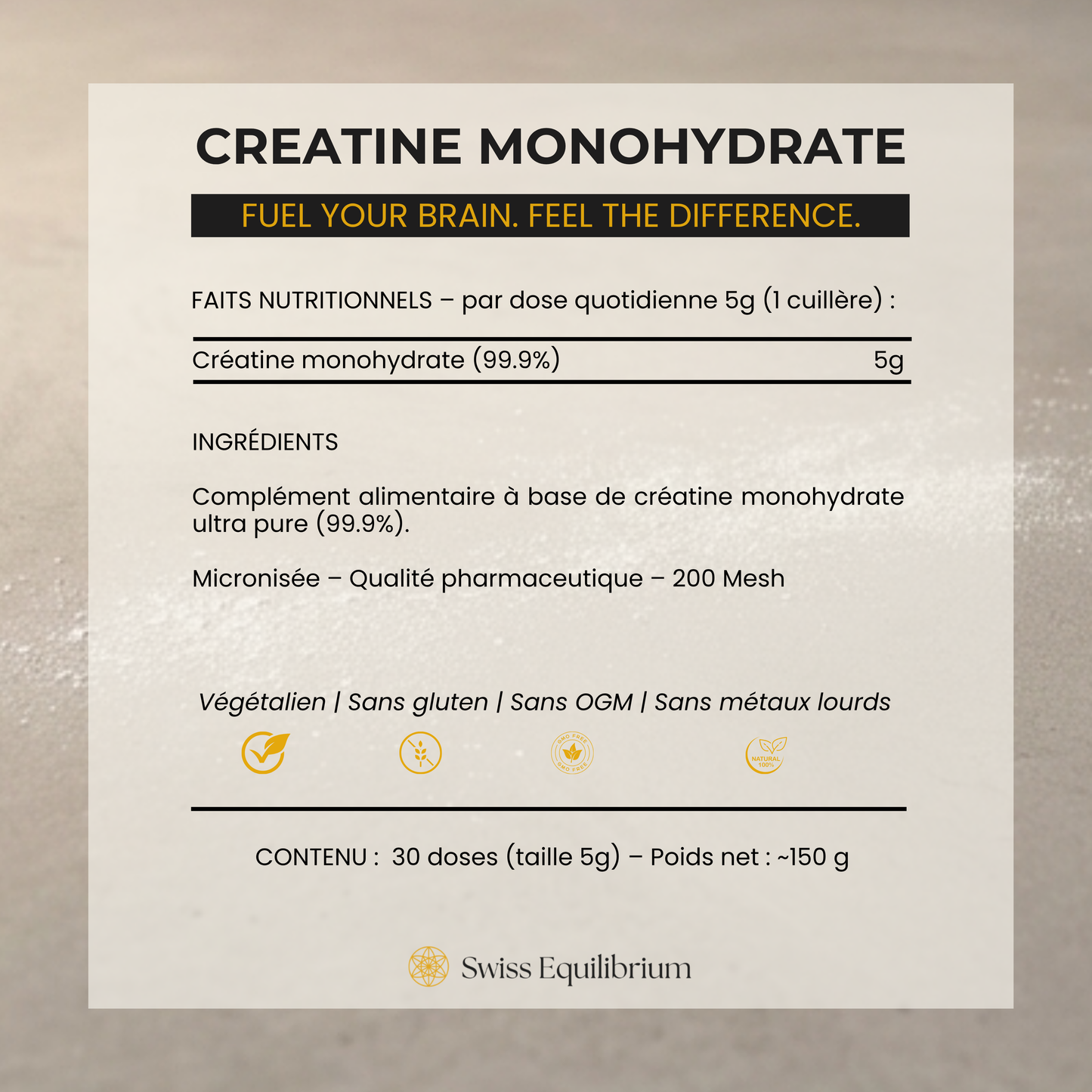
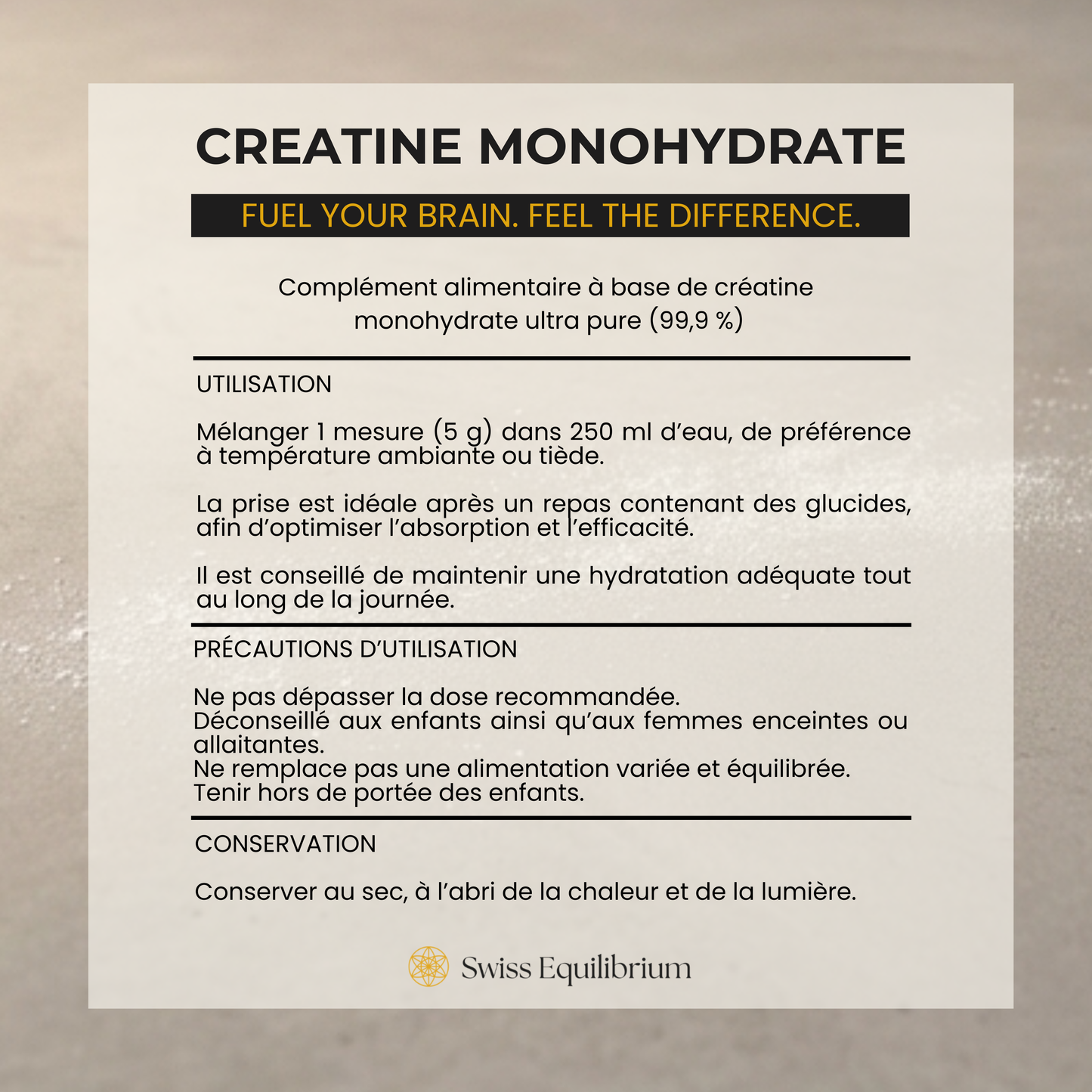
Our Creatine Monohydrate is 99.9% pure, micronised to 200 mesh, free of any additive and made in Switzerland. Creatine increases physical performance in successive bursts of short-term, high-intensity exercise; the beneficial effect is obtained with a daily intake of 3 g. For more on its effects, read our complete creatine guide and when to take creatine.
Frequently asked questions
Is creatine dangerous?
No, in healthy adults at usual doses (3 to 5 g per day). It is one of the most studied supplements. Ask your doctor if you have kidney disease or are pregnant or breastfeeding.
Does creatine damage the kidneys?
Studies have not shown harm to the kidneys in healthy people. It can raise creatinine on a blood test without any problem: tell your doctor.
Does creatine cause hair loss?
No study has shown that it causes hair loss. The idea comes from a single small 2009 study on a hormone, DHT. A 2025 trial found no difference from placebo.
Does creatine make you gain fat?
It can add 1 to 2 kg at first, but that is water stored in the muscles, not fat.
Can you take creatine long term?
Yes. Studies have followed people for several years without harm in healthy adults. Breaks are not necessary.
What should I do if I feel bloated?
Lower the dose to 3 g per day, take creatine with a meal and avoid large single doses.
Sources
- Kreider R.B. et al. (2017). International Society of Sports Nutrition position stand: safety and efficacy of creatine supplementation in exercise, sport, and medicine. Journal of the International Society of Sports Nutrition, 14, 18. DOI
- Antonio J. et al. (2021). Common questions and misconceptions about creatine supplementation: what does the scientific evidence really show? Journal of the International Society of Sports Nutrition, 18, 13. DOI
- de Souza e Silva A. et al. (2019). Effects of Creatine Supplementation on Renal Function: A Systematic Review and Meta-Analysis. Journal of Renal Nutrition, 29(6), 480-489. DOI
- van der Merwe J. et al. (2009). Three weeks of creatine monohydrate supplementation affects dihydrotestosterone to testosterone ratio in college-aged rugby players. Clinical Journal of Sport Medicine, 19(5), 399-404. DOI
- Ashtary-Larky D. et al. (2025). Does creatine cause hair loss? A 12-week randomized controlled trial. Journal of the International Society of Sports Nutrition, 22(sup1), 2495229. DOI
Published on 10 October 2026 by the Swiss Equilibrium team. This article is for information and does not replace advice from a doctor or pharmacist. Food supplements should not replace a varied and balanced diet.