Creapure or creatine monohydrate: what's the difference and which to choose?
Share
In short: Creapure is not a different form of creatine. It is a registered brand of creatine monohydrate, made in Germany by the AlzChem group. The molecule is exactly the same as in other creatine monohydrate products, so at the same dose the effect is identical. What differs is the manufacturer, its purity controls and traceability. When choosing, look at the form (monohydrate), purity (99.9% or more), the absence of additives, available analyses and the price per gram of pure creatine, rather than the name on the label.
Creapure: what the name really means
Creatine sold as a supplement is almost always creatine monohydrate: a creatine molecule bound to a water molecule. It is the most studied form and the one used in the vast majority of scientific trials.
Creapure is the brand of a German manufacturer of this raw material. Many supplement brands buy it and display its logo. Others use creatine monohydrate from other manufacturers, in Europe or Asia.
Creapure or monohydrate: the comparison
| Criterion | Creapure | Other creatine monohydrate |
|---|---|---|
| Molecule | Creatine monohydrate | Creatine monohydrate |
| Effect at the same dose | Identical | Identical |
| Manufacturer | AlzChem, Germany | Varies: check |
| Purity | Controlled by the manufacturer | Varies: look for 99.9% and analyses |
| Price | Usually higher | Varies |
Key takeaway: paying more for Creapure means paying for a guarantee of origin, not for a more effective creatine. A 99.9% pure creatine monohydrate, additive-free and tested, does the same job.
Are other forms of creatine worth it?
There is also creatine HCL (hydrochloride), creatine ethyl ester and "buffered" creatine (Kre-Alkalyn). They are often more expensive and marketed as better absorbed or free of water retention. Studies have not shown them to be superior to monohydrate, which remains the reference according to the International Society of Sports Nutrition position stand.
How to compare creatine sold in Switzerland
Creatine is sold at Migros and Coop, Decathlon and sports shops, pharmacies, drugstores and online. To compare correctly:
- Form: creatine monohydrate.
- Purity: 99.9% or more.
- Ingredient list: ideally a single ingredient, with no sugar, flavouring or colouring.
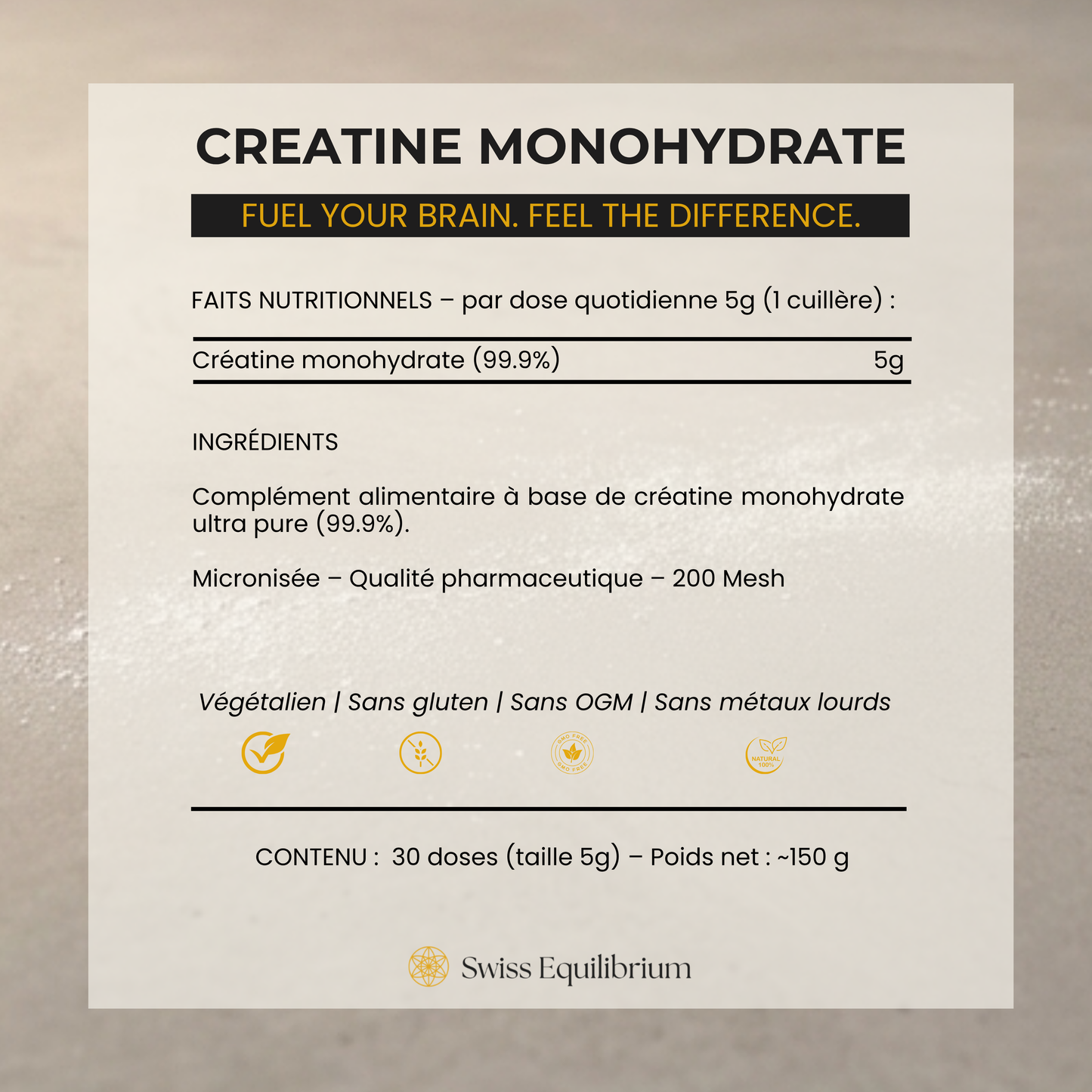
- Fineness: a micronised powder (for example 200 mesh) mixes better.
- Transparency: manufacturer or place of manufacture stated, analyses available on request.
- Price per gram: divide the price by the grams of pure creatine. Capsules and gummies are usually much more expensive.
Our creatine
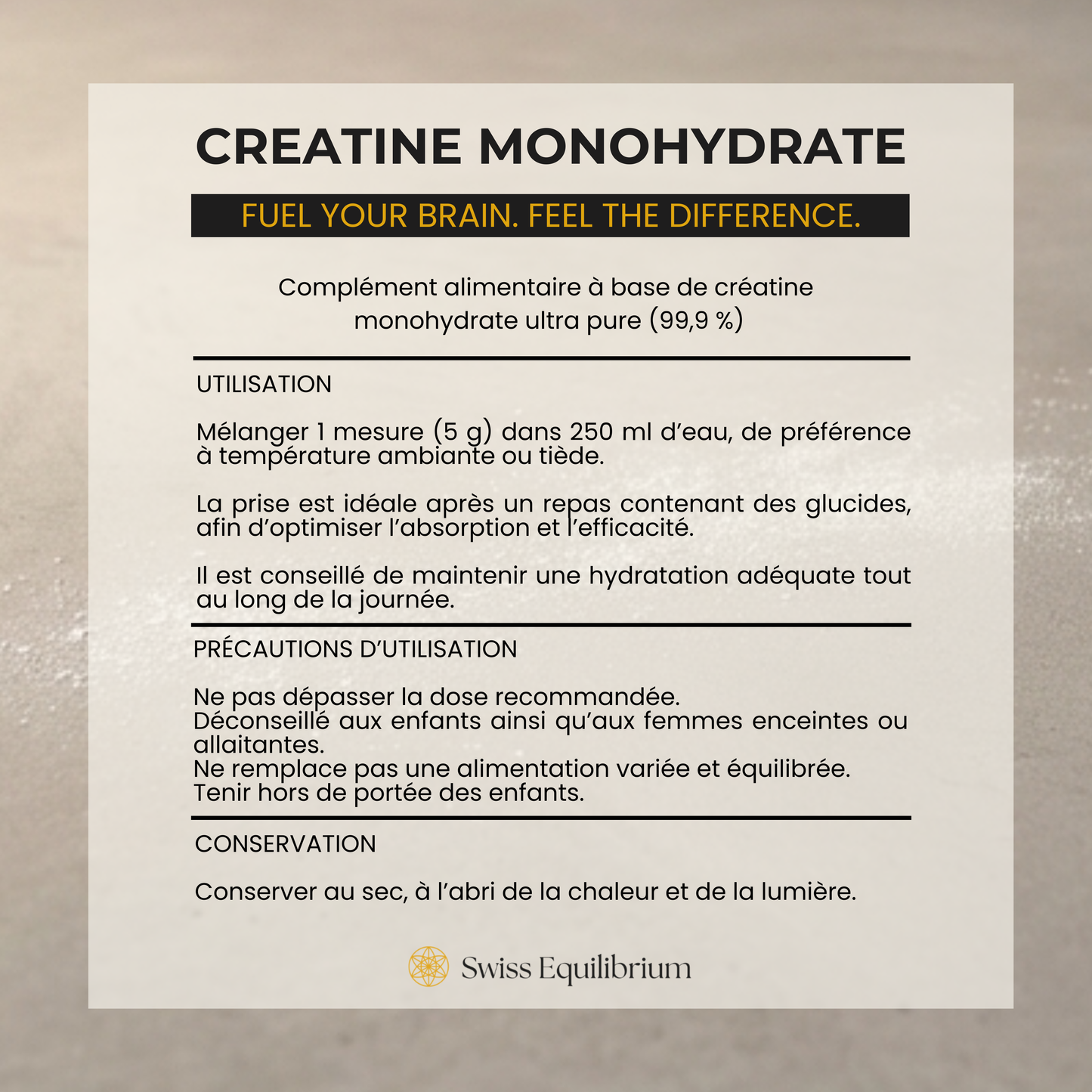
Our Creatine Monohydrate is 99.9% pure, micronised to 200 mesh, free of any additive, vegan and made in Switzerland. The dose is 5 g per day; a 150 g pouch lasts one month. Creatine increases physical performance in successive bursts of short-term, high-intensity exercise; the beneficial effect is obtained with a daily intake of 3 g.
For everything on effects, dosage and safety, read our complete creatine guide and creatine side effects.
Frequently asked questions
What is Creapure?
A registered brand of creatine monohydrate made in Germany by the AlzChem group. It is not a different form of creatine.
Is Creapure more effective than creatine monohydrate?
No. The molecule is the same. The difference lies in the manufacturer, its controls and traceability.
How do you compare two creatine products?
Look at form, purity, additives, fineness, available analyses and the price per gram of pure creatine.
Are creatine gummies or capsules just as good?
The creatine can be the same, but these formats cost more per gram and you often need several units to reach 3 to 5 g.
Sources
- Kreider R.B. et al. (2017). International Society of Sports Nutrition position stand: safety and efficacy of creatine supplementation in exercise, sport, and medicine. Journal of the International Society of Sports Nutrition, 14, 18. DOI
- Antonio J. et al. (2021). Common questions and misconceptions about creatine supplementation: what does the scientific evidence really show? Journal of the International Society of Sports Nutrition, 18, 13. DOI
Published on 10 October 2026 by the Swiss Equilibrium team. This article is for information and does not replace advice from a doctor or pharmacist. Food supplements should not replace a varied and balanced diet.